
Pump guides
Practical guides to choose, size and run pumps: flow and head, pump curves, NPSH and cavitation, efficiency classes, variable speed, booster sets and well pumps.
Fast worldwide delivery
- How to choose a heating circulator pump
Flow, head, connection and efficiency: the 4 parameters to get the circulator choice right. - Single-stage or multistage pump: differences and when to use them
One impeller or several? How the curve changes and when each solution is best. - Flow and head: how to size a pump
The two numbers that define every pump — and how to use them to find the right model on the curve. - EEI and IE efficiency classes: what they mean and how much you save
EEI for circulators, IE for motors: two labels that make a real difference on your bill. - How to read a pump curve
The performance curve tells you everything about a pump: here is how to read it to find the right duty point. - NPSH and cavitation: what they are and how to avoid them
Noise, vibration and wrecked impellers: cavitation is a pump's number-one enemy. Here is how to avoid it. - Fixed or variable speed pump (inverter)?
An inverter matches pump speed to real demand: less consumption, less wear. But is it always worth it? - How to size a water booster set
Peak flow, head and number of pumps: the steps to size a reliable booster set. - Submersible well pumps: a buyer's guide
Well diameter, depth and flow: the criteria to pick the right submersible without mistakes.
In this section
-
 EEI and IE efficiency classes: what they mean and how much you save
-
Fixed or variable speed pump (inverter)?
-
Flow and head: how to size a pump
-
How to choose a heating circulator pump
-
How to read a pump curve
-
How to size a water booster set
-
NPSH and cavitation: what they are and how to avoid them
-
Single-stage or multistage pump: differences and when to use them
-
Submersible well pumps: a buyer's guide
Grundfos catalogues
All catalogues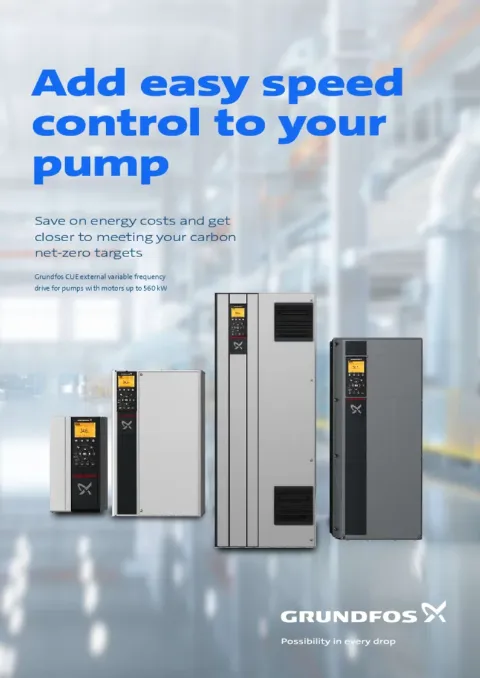


Fast worldwide delivery · reply within 12 working hours
Request a quote for Grundfos